
The sequence
Combining, from arrival to the label
Consolidation is not a button. It is a period of time during which things arrive separately, sit in a building, and then get turned into one object with one weight and one address. Most of the money is decided in that period, and almost none of it is decided by you at the moment you press ship.
The sequence below is the agent’s own, read off its guide and help pages. What this page adds is where each step costs you something.
What actually happens, and what it costs
Six steps. Three of them have a price on them.
Each order is bought separately
Superbuy states that orders paid between 09:00 and 18:00 Beijing time are processed within six hours, and orders paid between 18:00 and 09:00 are processed before 14:00 the next day, with the purchase made within 24 hours of your confirmation. Sellers then ship to the warehouse at their own pace, which is the part nobody controls.
It arrives and is inspected and photographed, free
The arrival inspection and the arrival photographs are on the free list. This is the moment to look, because everything after it is harder to reverse. What those photos can settle.
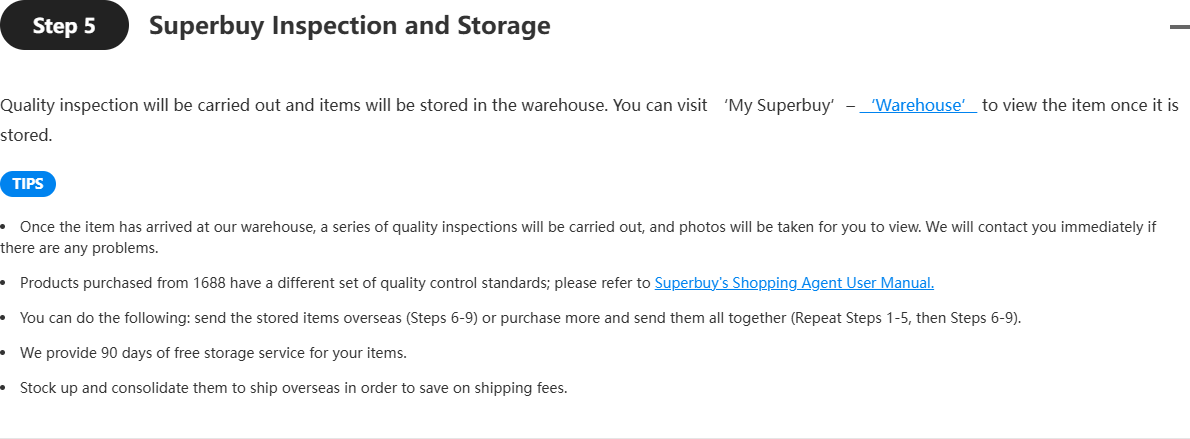
It sits, and the storage clock starts
Superbuy states 90 days of free storage from arrival, then 0.1 yuan per item per day, to a maximum of 180 days. After 180 days with no shipping order and no response, the item is treated as abandoned and disposed of. An Extend Storage Period service exists and has to be bought in advance.
You submit a parcel
This is where you choose what goes in, which route carries it, and which packing lines to add. Until this point nothing has a weight, because nothing has a box.
The warehouse packs and weighs it
Standard packing is free; the eleven paid lines are the menu. Priority stock-out buys three hours inside a stated window and nothing else. The menu, priced.
The freight is calculated and billed
On the greater of real weight and volume weight, at length times width times height over 6,000. This is the number every packing decision was really about.
What the route cards actually show you
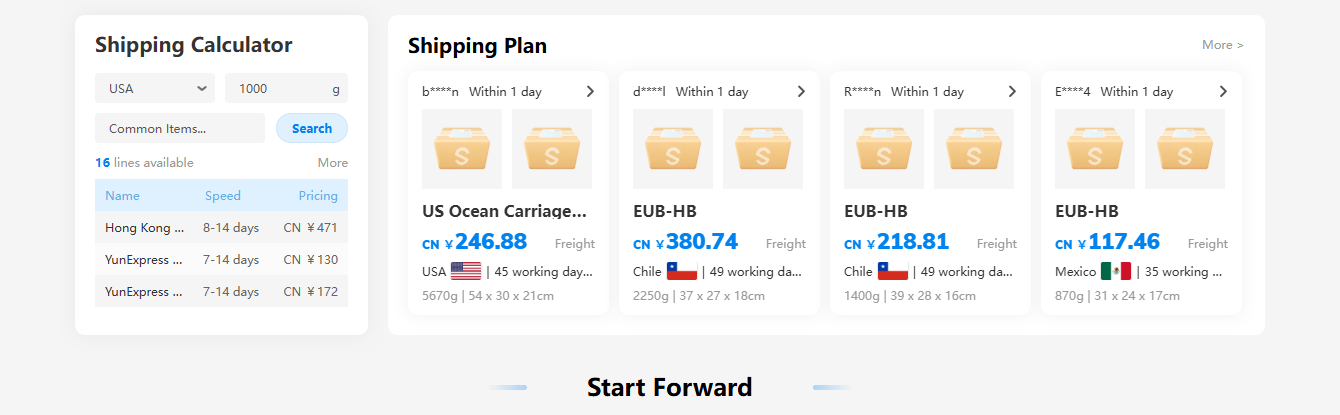
The forwarding page prints live shipping plans with a weight, a box size, a price and a working-day range on each card. They are a useful shape even though the numbers are examples: notice that the two Chile cards differ by 850 grams and by about 160 yuan, and that the Mexico card is cheaper than either while taking longer.
That is the trade the whole site is about. Weight and volume move the price; route and destination move it more. Neither moves at all until the box is real, which is why no guide, including this one, can quote you a shipping figure.
The decision you can only make once
Splitting a consolidated order into two parcels is not an undo. Once a box is packed and weighed it is an object, and taking it apart means a second handling and often a second box.
So the useful question before you submit is not what is cheapest, it is what you would regret. Two parcels on two routes costs more and loses less when one of them is seized. One parcel on one route is cheaper and is a single point of failure. Superbuy states that an over-weight parcel cannot be submitted at all and has to have items removed and be resubmitted, which is the version of this decision nobody plans for.
If the contents are mixed enough that a restriction applies to one of them, splitting stops being an optimisation and becomes the only option. The prohibited and restricted list is worth reading before you submit, not after.

Next step.
- The packing menu is what you are choosing from at the submit step.
- What it costs is where the two fee stages sit either side of this one.
Before combining: order and review each item
Use the original listing to confirm the seller, colour, quantity and garment measurements. Import the product link into Superbuy and compare the captured options with the listing. Confirm item cost, domestic shipping and any service fee before making the first payment.
Watch for stock or additional-payment questions while the buyer processes the order. When the item arrives, compare the warehouse photos with the exact variant you ordered. Ask for a named close-up or measurement if the default set is insufficient.
If something is wrong, ask about return eligibility, seller approval, the deadline and costs before dispatch. Once the goods are accepted, follow the parcel sequence above and pay the separate international shipping quote.
Track and receive
Keep the parcel number and follow its carrier handover. If tracking stops, contact the agent with the last scan rather than opening another order enquiry. At delivery, photograph damage, keep labels and packaging and report missing contents promptly.